Introduction
Lisfranc injuries are among the most challenging foot and ankle injuries encountered in orthopedic trauma. Although relatively uncommon, they account for a significant proportion of missed diagnoses in emergency departments. Without timely and stable fixation, a Lisfranc ligament injury can lead to chronic midfoot instability, post-traumatic arthritis, persistent pain, and long-term functional impairment.
As orthopedic surgery continues to evolve toward minimally invasive techniques and preservation of joint function, Suture Button with Fixed Loop fixation has emerged as an innovative alternative to traditional screw fixation. This flexible fixation technique provides excellent stability while allowing physiological motion across the tarsometatarsal joint, making it increasingly popular among orthopedic surgeons worldwide.
This article explores the anatomy of the Lisfranc joint, injury classification, current treatment strategies, and the clinical advantages of the ATOM Suture Button with Fixed Loop System for modern Lisfranc injury fixation.

Understanding the Lisfranc Joint Complex
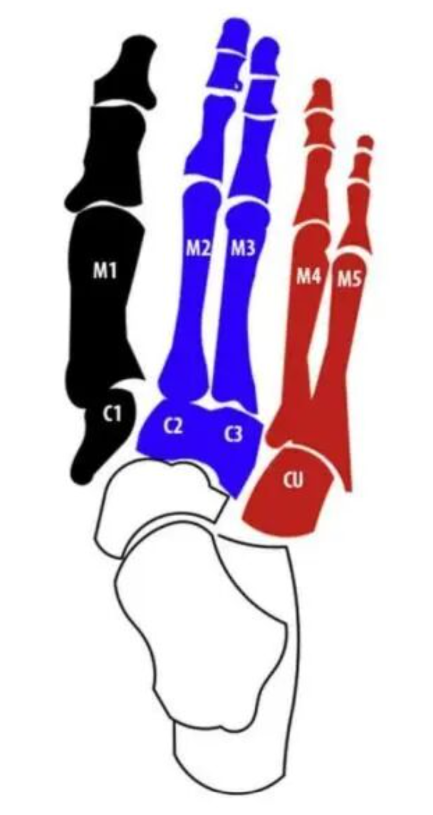
The Lisfranc joint complex consists of the articulation between the metatarsals and the cuneiform bones, providing stability for the midfoot during standing, walking, and running. The strongest stabilizing structure is the Lisfranc ligament, which extends from the medial cuneiform to the base of the second metatarsal. Unlike the other metatarsals, there is no transverse ligament between the first and second metatarsals, making the Lisfranc ligament essential for maintaining midfoot alignment. When this ligament is disrupted, instability develops rapidly, often resulting in displacement of the metatarsals and collapse of the foot arch.
Common Causes of Lisfranc Injuries
Lisfranc injuries may result from both low-energy and high-energy trauma.
Common mechanisms include:
Athletes participating in football, soccer, basketball, rugby, and skiing are particularly susceptible due to repetitive rotational stress on the midfoot.
Clinical Symptoms
Patients with a Lisfranc injury often present with:
Severe midfoot pain
Swelling over the dorsum of the foot
Difficulty or inability to bear weight
Plantar ecchymosis (a classic clinical sign)
Midfoot instability
Pain during forefoot rotation
Because symptoms may resemble a simple foot sprain, approximately 20% of Lisfranc injuries are initially overlooked, highlighting the importance of accurate imaging and clinical evaluation.
Diagnosis of Lisfranc Ligament Injury
Early diagnosis is essential to prevent long-term complications.
Recommended imaging includes:
Weight-Bearing X-ray:Weight-bearing radiographs remain the first-line imaging method for detecting joint widening or displacement.
Computed Tomography (CT):CT provides excellent visualization of subtle fractures and joint incongruity.
Magnetic Resonance Imaging (MRI):MRI is considered the gold standard for evaluating ligament integrity and soft tissue injuries, especially in purely ligamentous Lisfranc injuries.
Modern Classification of Lisfranc Injuries
Current orthopedic practice commonly uses the Myerson Classification, which categorizes injuries according to displacement patterns.
Stage I Injury: Lisfranc ligament sprain. No significant changes are observed on weight-bearing radiographs (anteroposterior and lateral views). There is no significant widening of the interosseous space or decrease in arch height, but increased signal intensity on bone scintigraphy.
Stage II Injury: Lisfranc ligament rupture. The interosseous space between the 1st and 2nd metatarsals is 1-5 mm. There is no decrease in arch height.
Stage III Injury: Significantly widened interosseous space between the 1st and 2nd metatarsals. The arch height decreases (the distance between the plantar surfaces of the 5th metatarsal bones).

Traditional Surgical Fixation Methods
Historically, several fixation methods have been used for Lisfranc injuries.
Kirschner Wire Fixation
Provides temporary stabilization but offers limited mechanical strength and often requires prolonged immobilization.
Cannulated Screw Fixation
Cannulated screws provide rigid fixation and remain a commonly used technique.
However, screw fixation may:
· Damage articular cartilage
· Restrict physiological joint motion
· Require routine implant removal
· Increase the risk of screw breakage
Dorsal Plate Fixation
Dorsal bridge plating offers strong fixation for highly unstable injuries but involves more extensive soft tissue dissection.
Why Suture Button with Fixed Loop Is Transforming Lisfranc Fixation
In recent years, Suture Button with Fixed Loop technology has gained widespread acceptance for flexible fixation of Lisfranc ligament injuries. Unlike rigid screw fixation, the system utilizes high-strength sutures and titanium buttons to stabilize the joint while preserving controlled physiological movement. This design more closely replicates the natural biomechanics of the Lisfranc ligament.
Clinical Applications
The ATOM Suture Button with Fixed Loop System is suitable for:
· Lisfranc ligament injuries
· Midfoot instability
· Foot and ankle trauma
· Sports medicine reconstruction
· Syndesmotic fixation
· Revision ligament reconstruction
Why More Surgeons Are Choosing Flexible Fixation
Recent clinical studies have demonstrated that flexible fixation systems can achieve outcomes comparable to rigid screw fixation while offering several additional benefits.
Compared with traditional screw fixation, Suture Button with Fixed Loop systems may provide:
· Lower rates of implant removal
· Improved patient comfort
· Better preservation of joint motion
· Reduced cartilage injury
· Earlier return to sports and daily activities
These advantages have made flexible fixation an increasingly preferred option for selected Lisfranc injuries.
Conclusion
Lisfranc injuries require timely diagnosis, anatomical reduction, and stable fixation to restore midfoot stability and prevent long-term complications.
As orthopedic surgery continues to embrace minimally invasive and joint-preserving techniques, Suture Button with Fixed Loop fixation has become an increasingly attractive solution. By combining flexible stabilization with reliable biomechanical strength, it helps surgeons achieve excellent clinical outcomes while promoting faster recovery and preserving physiological joint motion.
ATOM remains committed to providing innovative orthopedic implant solutions that support modern trauma surgery and improve patient care worldwide.